04E-commerce
HMC Nepal Commerce & Warranty Platform
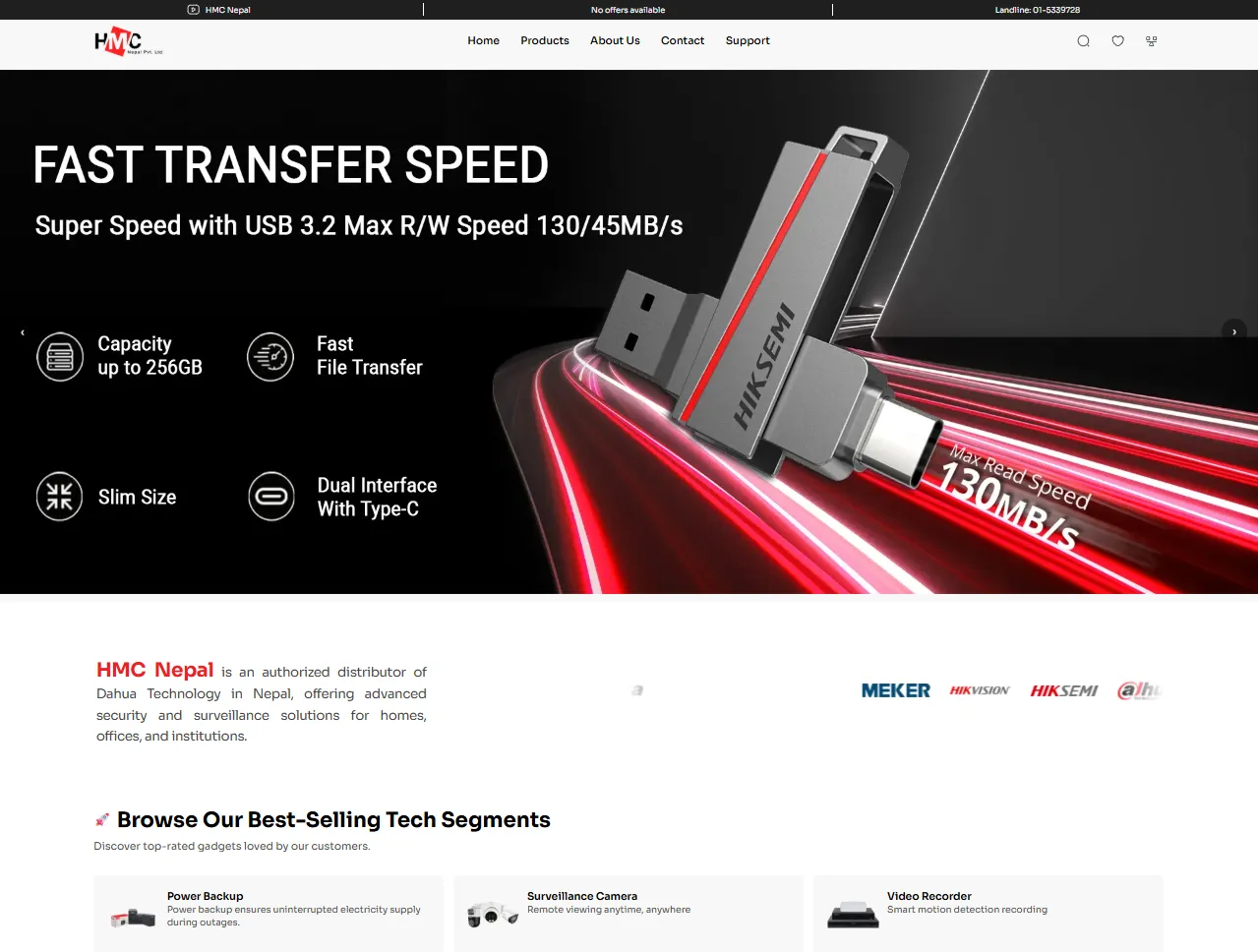
An integrated storefront and warranty platform for HMC Nepal. Customers browse and compare products and request quotations; dealers register warranties and check serial numbers; internal teams manage the product catalog, dealer approvals, promotions, and warranty records.
Context
The problem
Customers, authorized dealers, and internal staff each interact with HMC Nepal’s product and warranty workflows. This platform connects those experiences through separate public, partner, and admin applications backed by a shared API.
Solution
How TeachMate works
The system combines a public product storefront, an admin console, and a dealer portal with an Express REST API. Customers can browse products and request quotations. Dealers can apply for approval, manage their profiles, and register warranties. Staff manage catalog content, dealer status, and warranty records. Serial validation can use HMC’s ERP and fall back to SmartLife when configured.
Capabilities
What it includes
- Product browsing with category and brand filters, search, comparison, and wishlist-based quotation requests
- Admin tools for products, categories, brands, banners, carousels, offers, dealers, and warranties
- Dealer registration with supporting documents, admin review, and status notifications
- Warranty registration, dealer history and stats, public serial-number lookup, and warranty replacement
- QR-based serial entry and bulk ERP serial validation
- Admin warranty totals, active/expired counts, monthly trends, dealer breakdowns, and audit history
System design
Architecture
- Three Next.js portals—the public storefront, admin console, and dealer portal—communicate with a separate Express 5 REST API. The storefront uses Next.js 15; the admin and partner portals use Next.js 16.
- The API uses TypeScript, Mongoose, and MongoDB for catalog, dealer, warranty, and audit records; Multer handles uploaded product and dealer documents.
- JWT authentication and role checks separate dealer and administrative workflows; Nodemailer sends dealer-status and account emails.
- ERP integration obtains and caches OAuth2 tokens, validates serial numbers against HMC first, and falls back to SmartLife when configured.
Trade-offs
Engineering decisions
- Separate public shopping, dealer operations, and internal administration into distinct portals backed by one shared API.
- Validate product serials against ERP data and existing warranty records before accepting warranty registrations.
- Calculate warranty status from each record’s expiry date so active and expired results reflect the current date without a scheduled status update.
- Record dealer and administrative actions in audit logs to make approvals and warranty operations traceable.